The New Era for Cross-Border Payments in Africa - Stablecoin Remittances
Precious
CW
Introduction
Africa receives billions of dollars in remittances every year, making cross-border payments a critical part of many households and businesses. However, traditional remittance channels are often slow, expensive, and inaccessible to a large portion of the population. As a result, many Africans are turning to stablecoins as an alternative means of sending and receiving money. More than just another cryptocurrency trend, stablecoin remittance is emerging as a practical financial solution to some of Africa’s most persistent economic challenges.
What is Stablecoin Remittance?
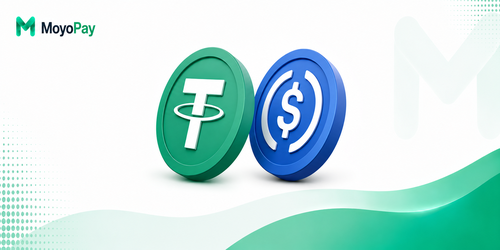
Stablecoin remittance refers to the use of stablecoins to transfer money across borders. Stablecoins are digital currencies whose value is tied to stable assets such as the US dollar. This stability makes them more suitable for payments than highly volatile cryptocurrencies.
A typical transaction involves a sender purchasing stablecoins and transferring them digitally to a recipient in another country. The recipient can then convert the stablecoins into local currency or use them for transactions where accepted. Unlike traditional international transfers that may take days, stablecoin transactions can often be completed within minutes.
Why is Stablecoin Remittance Important in Africa?
The growing interest in stablecoins across Africa is not accidental. It is largely driven by economic realities facing many African countries.
In several African economies, local currencies have experienced significant depreciation against major global currencies. This has reduced purchasing power and made it difficult for individuals and businesses to preserve value. Stablecoins offer an alternative by providing access to a digital asset that closely tracks the value of stronger international currencies.
Additionally, foreign exchange restrictions in some countries can make it difficult for businesses to access dollars for international trade. Stablecoins are increasingly being used as a bridge for international payments, helping businesses operate more efficiently.
Most importantly, stablecoins are gaining traction because they solve real problems rather than simply offering new technology. Their adoption is being driven by necessity, not speculation.
Benefits of Stablecoin Remittance in Africa
Lower Transaction Costs
One of the major advantages of stablecoin remittance is the reduction in transfer fees. Traditional remittance services can consume a significant percentage of the money being transferred through fees and exchange rate charges. Stablecoins can reduce these costs, allowing users to retain more of the money they send.
Faster Cross-Border Transfers
Speed is one of the most significant advantages of stablecoin remittance. Funds can be transferred within minutes, improving access to money during emergencies and supporting business transactions that require quick settlement.
Greater Financial Inclusion
Millions of Africans remain outside the traditional banking system. Stablecoins allow individuals with smartphones and internet access to participate in digital finance without requiring a conventional bank account.
Protection Against Currency Depreciation
For individuals living in economies with high inflation or weakening currencies, stablecoins provide a means of preserving value. This makes them attractive not only for remittances but also for savings.
Support for Small Businesses
African entrepreneurs increasingly operate across borders. Stablecoins can simplify international payments, making it easier for businesses to pay suppliers, receive customer payments, and participate in the global economy.
Challenges Facing Stablecoin Adoption
Regulatory Uncertainty
Governments and financial regulators are still determining how stablecoins should be regulated. Unclear policies may slow adoption and create uncertainty for businesses and users.
Limited Digital Literacy
While smartphone adoption is growing rapidly, many people still lack the knowledge required to safely use digital assets and financial technology platforms.
Security and Fraud Risks
Users can lose funds through scams, phishing attacks, or poor security practices. Consumer education remains essential for safe adoption.
Liquidity and Conversion Issues
In some regions, converting stablecoins into local currency remains difficult due to limited exchange infrastructure and low market liquidity.
Original Analysis: Why Stablecoins Could Become Africa’s Most Important FinTech Innovation
While stablecoins are often discussed within the cryptocurrency industry, their greatest impact in Africa may come from solving everyday financial problems rather than serving as investment assets.
The success of mobile money services across Africa demonstrated that people adopt financial technologies when they are simple, accessible, and solve real challenges. Stablecoins appear to be following a similar path. They offer a practical response to expensive remittances, currency instability, and limited banking access.
For many African freelancers, remote workers, and small business owners, stablecoins are becoming more than a payment method—they are increasingly viewed as a tool for accessing global markets and protecting earnings from local currency fluctuations. This is particularly important in countries where currency depreciation can quickly reduce the value of income and savings.
Furthermore, stablecoins are creating new opportunities for cross-border commerce by enabling faster and more affordable transactions between individuals and businesses in different countries. As Africa’s digital economy continues to expand, demand for efficient payment solutions is expected to grow.
If regulatory frameworks become clearer and financial education improves, stablecoins could evolve from a niche digital asset into a mainstream payment tool. Rather than replacing banks, they may complement existing financial systems by providing faster and more affordable cross-border transactions.
The future of stablecoin remittance in Africa will likely depend less on cryptocurrency enthusiasm and more on its ability to deliver reliable financial services to ordinary people. If this trend continues, stablecoins could become one of the most transformative financial innovations on the continent.
Conclusion
Stablecoin remittance is transforming the way money moves across Africa. By reducing transaction costs, increasing speed, and expanding access to financial services, stablecoins are addressing critical gaps in the continent’s financial ecosystem. Although challenges remain, their growing adoption suggests that they could play a major role in the future of African finance. As digital innovation continues to reshape the financial sector, stablecoins may become one of the most significant tools for promoting financial inclusion and economic growth across Africa.