Why Africa Leads in Stablecoin Adoption - And Why Infrastructure Is What Comes Next
MoyoPay Team
CMO
The Contrast That Reveals Everything
A person in Lyon can wake up on a Saturday morning and decide they want to spend the weekend in Barcelona. They book a train for €40–80, pack a small bag, and arrive in Spain after five or six hours. No visa. No passport control in most cases. They can pay with their card at any café, shop, or train station without thinking twice.
Now consider someone in Port Harcourt who wants to send money to a friend in Kigali.
Their naira leaves Nigeria and gets converted to USD through a correspondent bank — often in New York or London. It then moves through the SWIFT network, touching two or three intermediary banks along the way. It arrives in Rwanda, gets converted into Rwandan francs, and finally lands in the recipient’s bank account — if it doesn’t get flagged during a “compliance review.”
This process can take three to five business days. And that’s when everything goes smoothly.
The same friction exists with bank cards. Many Nigerians still cannot reliably pay for basic online services — Netflix, Spotify, Amazon, or international subscriptions — with their local bank cards. The architecture simply wasn’t built for seamless global participation.
This is not a technology problem. It is a structural one.
The Architecture We Inherited
African borders were drawn in Berlin in 1884–1885 by European powers who had, in many cases, never set foot on the continent. These borders cut through ethnic groups, separated communities that had moved freely for generations, and created nation-states designed primarily as units of extraction and control.
This architecture was never truly dismantled. It was inherited.
The financial rails that followed were built with the same logic. Correspondent banking relationships, SWIFT messaging systems, capital controls, and restricted payment infrastructure were designed to monitor, tax, and limit the flow of value — not to facilitate free movement within the continent.
Today, many African central banks maintain strict capital controls. These policies are often justified as necessary to protect foreign reserves and maintain monetary stability. In practice, they make it difficult — sometimes impossible — for ordinary people and businesses to move money across borders without paying significant costs in time, fees, and uncertainty.
The result is a continent where moving value internally can be more difficult than moving it externally.
The Human Cost of Friction
This is not an abstract policy discussion. It shows up in everyday life.
A freelancer in Lagos receives payment in USDT from a client in Europe. To pay rent or school fees, they must sell that USDT — often at unfavorable rates — wait for the funds to clear through the banking system, and absorb the cost of volatility during the process.
A family in Nairobi receives remittances from relatives abroad. By the time the money reaches them, a significant portion has been lost to intermediary fees and unfavorable exchange rates.
An importer in Accra needs to pay a supplier in China. The process involves multiple conversions, delays, and compliance checks that can take days or weeks — time during which market prices can shift and margins can disappear.
These are not edge cases. They are the daily reality for millions of Africans who participate in the global economy but are forced to navigate systems that were never designed with their realities in mind.
Stablecoins as Individual Workarounds
This is the context in which Africa’s high stablecoin adoption should be understood.
When people say Africa leads the world in stablecoin usage, they often frame it as a story of technological adoption or crypto enthusiasm. It is not.
It is the story of millions of individuals and businesses quietly building workarounds to systems that make the most basic financial activities — receiving payment, paying bills, moving money to family, protecting savings — unnecessarily difficult and expensive.
Stablecoins became popular not because they were marketed aggressively, but because they offered something the existing infrastructure did not: a way to hold value outside the local currency without needing permission from a bank, and a way to move that value across borders without waiting days for correspondent banking networks to clear.
In this sense, stablecoin adoption in Africa is not a technology trend. It is a response to structural constraints.
The Infrastructure That Is Still Missing
But here is the critical point that often gets missed:
Holding stablecoins is not the same as being able to use them.
Having USDT or USDC in a wallet does not automatically mean you can pay your electricity bill, send money to your cousin in another country, or shop online without friction. The on-ramps and off-ramps — the points where stablecoins connect to local currencies, payment systems, and real-world spending — remain underdeveloped or nonexistent in many places.
This is the infrastructure gap.
It is why a Nigerian freelancer can receive payment in USDT but still has to sell it at a loss to pay local expenses. It is why a Kenyan trader can hold value in dollars but still struggles to pay suppliers in local currency without multiple conversions. It is why families receiving diaspora remittances often lose a meaningful percentage to fees and unfavorable rates before the money even reaches them.
Stablecoins exposed the gap. They did not close it.
What Real Infrastructure Looks Like
Closing this gap requires more than wallets and exchanges. It requires building the rails that connect stablecoins to everyday African life.
This means:
Direct local bill payments — the ability to pay electricity bill, DSTV, school fees, or rent directly from a stable dollar balance without forced conversion.
Seamless on-ramps and off-ramps — fast, transparent, and affordable ways to move between local currencies and stable dollars.
Virtual and physical cards — tools that allow Africans to spend stable dollars globally without the usual restrictions and failures.
Instant cross-border transfers — the ability to send value to someone in another African country without routing through New York or London.
Yield and savings products — ways for people to earn returns on stable dollar holdings without needing to participate in speculative crypto markets.
Invest in Tokenised Stocks — ability to buy fractional shares in US companies directly from your USDT/USDC balance. Access global equities without a traditional brokerage - simple, fast, and built for African investors.
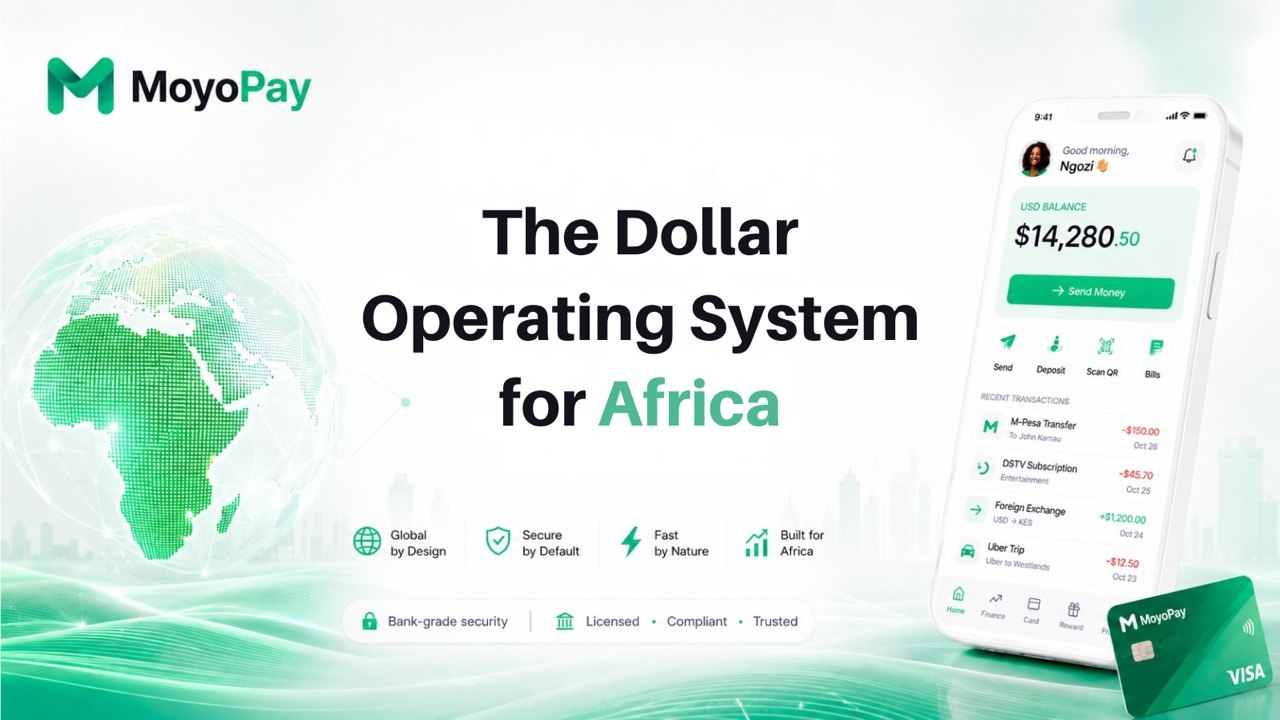
This is what a functional Dollar Operating System for Africa looks like. Not another app that lets you buy and hold crypto, but infrastructure that makes stable dollars usable for the things people actually need to do with money.
The Opportunity in Honesty
If you are building in this space, the opportunity is enormous — but only if you are honest about the problem.
Africa does not need more platforms that treat stablecoins as speculative assets. It needs infrastructure that treats stable dollars as what they should be: a reliable store of value and medium of exchange for people who have been systematically excluded from easy access to financial tools that work across borders and across currencies.
The structural constraints are real. The legacy of how borders were drawn, how financial rails were built, and how capital movement has been restricted is not theoretical. It shows up in transaction fees, in processing delays, in declined cards, and in the quiet resignation of people who have simply accepted that moving money will always be difficult.
But these constraints are also the reason the opportunity is so large.
When you build tools that remove even a fraction of this friction, the adoption is not driven by marketing. It is driven by relief. People do not need to be convinced to use something that makes their lives meaningfully easier. They simply need it to exist.
The Work Ahead
At MoyoPay, we are building one piece of this infrastructure. We are focused on making stable dollars usable for everyday African life paying bills, sending money, spending globally without the structural tax that has long been accepted as normal.
We are not under any illusion that one platform will solve centuries of inherited architecture. But we also believe that infrastructure is built piece by piece, and that each working piece makes the next one more possible.
The question for anyone building in this space is simple:
Are you building for the fantasy of adoption, or for the reality of the constraints?
If it is the latter, then the opportunity is not just real. It is urgent.
Because the demand is not manufactured. It is the result of millions of people working around systems that were never designed for them to succeed.
The future of money in Africa will not be built by ignoring this reality. It will be built by understanding it and by building the infrastructure that should have existed all along.
MoyoPay — The Dollar Operating System for Africa
moyopay.io
This article is part of MoyoPay’s thought leadership series on building real financial infrastructure for Africa.